AI on the Factory Floor: What Manufacturing Actually Looks Like in 2026
Translated from the original Korean post. 한국어 원문 보기 →
The factory floor is changing
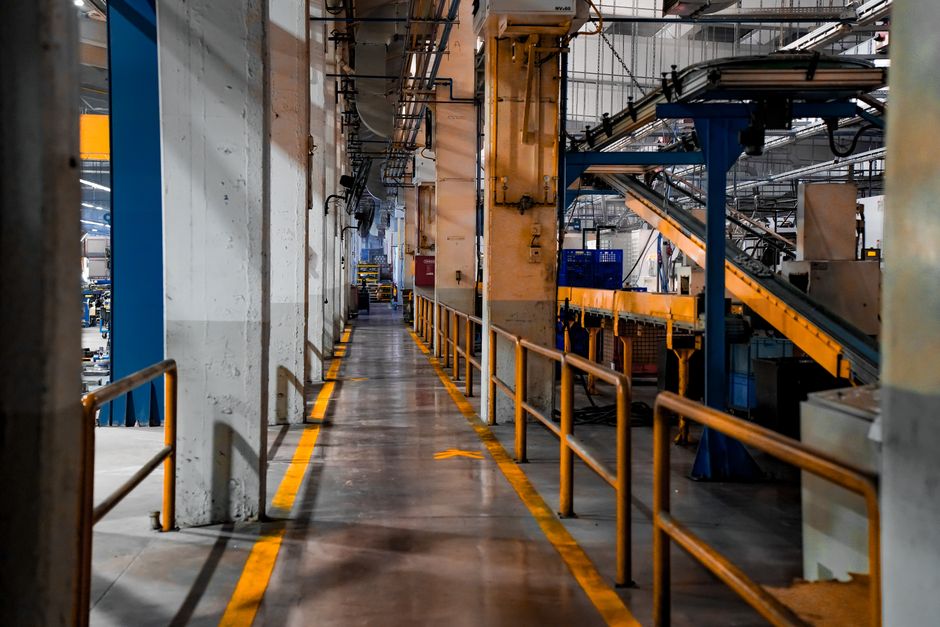
I went to a manufacturing conference recently, and one plant manager's comment stuck with me. "The machines tell us before they break now." I thought it was a joke at first. Turned out he was talking about an AI-based predictive maintenance system they'd rolled out.
For decades, manufacturing has run on human experience and scheduled inspections. An engineer walks the line on a fixed cycle, checks the equipment, and when something breaks, that's when it gets fixed. It worked. It also had obvious limits. Plenty of problems only surfaced after the machine had already stopped.
I keep re-reading this scene in the language of IT operations. Scheduled inspection is batch monitoring, basically. You only check state at fixed intervals, so whatever happens in between stays dark until the next pass. It's the same feeling as digging through logs after an outage — something I did plenty of back when I ran systems. Reactive is always the expensive option.
But that structure is shifting in a lot of factories right now. AI is walking onto the floor.
Machines started talking about how they feel
Predictive maintenance is probably where AI has landed most practically in manufacturing. Factory equipment today is wrapped in sensors. Vibration sensors pick up bearing wear and imbalance. Temperature sensors catch overheating and cooling system faults. Hydraulic and pneumatic systems get watched by pressure sensors, motor load by current sensors.
AI streams all of that around the clock and looks for patterns that don't match the usual. Catching a bearing as it slowly wears down and its vibration signature drifts, for instance.
Pull the structure apart and it's a familiar picture. Sensors emit metrics, time-series data piles up, an alert fires when something crosses a threshold or looks anomalous. Not fundamentally different from how I monitored Kubernetes clusters. The subject changed from a Pod to a bearing, but the idea — turn state into an observable signal, then track how that signal moves — is identical. Manufacturing is adopting observability, just late.
McKinsey reports that plants running AI-based predictive maintenance cut equipment downtime by 30–50% and maintenance costs by 10–20%. That's the classic payoff from trading reactive for proactive.
Companies like Tata Steel already have AI monitoring systems running in production. Unplanned equipment stops dropped, and production stability improved noticeably.
Inspection past the limits of the human eye
Quality control has changed a lot too. Workers used to eyeball defects themselves, and as line speeds climbed, human eyes hit their ceiling.
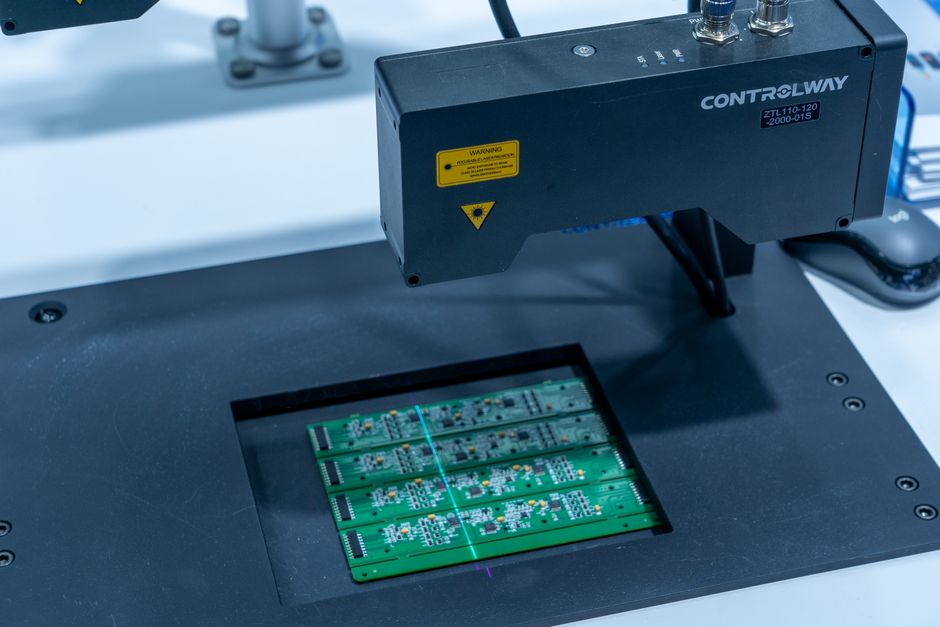
Computer vision moved into that gap. High-resolution cameras plus machine learning algorithms, catching micro-defects a person would blow right past.
The auto industry has been especially aggressive here. Maruti, Suzuki, Tata Motors and others have bolted AI inspection onto their production lines. These systems check weld quality — is the bead uniform, any porosity — paint condition like color uniformity and surface defects, and whether parts got assembled at the right position and angle.
The point is that it's faster and more accurate than a person and it doesn't get tired. Same standard applied 24 hours a day. One caveat, though. A vision model only catches defects it was trained on. A failure mode it's never seen can walk right past it. Which means somebody has to keep labeling, retraining the model, and filtering false positives — an operational loop that never stops turning. Automating inspection is closer to a starting point than a finish line.
Production planning got smarter too
AI is taking up more space on the efficiency side as well. Deloitte research found that manufacturers using AI raised overall productivity by 10–20%.
Here's where AI is actually touching things.
| 영역 | AI 활용 방법 | 효과 |
|---|---|---|
| 생산 스케줄링 | 수요 예측과 설비 상태를 고려한 최적화 | 납기 단축, 재고 감소 |
| 병목 지점 분석 | 실시간 생산 데이터로 지연 요인 파악 | 처리량 증가 |
| 공급망 조율 | 부품 공급 상황과 생산 계획 동기화 | 자재 부족 리스크 감소 |
Large players like Reliance Industries are already putting serious money into advanced analytics — pooling data from the entire plant, analyzing it, and hunting for the optimal way to run.
Which raises a question. Is this actually possible because of AI? Half yes, half no. Scheduling optimization and bottleneck analysis are problems that classical statistics and optimization techniques solve reasonably well, as long as the data is there. The hard part isn't the algorithm, it's the data pipeline. Every line has different equipment, data formats nobody standardized, collection paths that drop out. Clean that up or every model you stack on top will give you shaky results. The most common failure I saw during consulting work wasn't the model — it was data consistency falling apart underneath it.

AI left the lab
What I find most interesting is that AI has become part of the daily routine on industrial sites. A few years ago it felt like something that belonged to research labs and tech companies. Now it's running all over the factory floor like it's nothing special.
From monitoring machine performance to spotting defects on the line, AI is making manufacturing faster and more efficient. New possibilities keep opening up where traditional manufacturing meets data-driven systems.
There are real obstacles, of course. Rollout cost, finding technical talent, and the data cleanup I mentioned. The people problem in particular is no joke. You need someone who can handle sensor data, operate models, and understand the equipment on the floor — all at once. People with all three are rare. So IT and OT (operational technology) have to move like one team, and the fact that the two organizations speak different languages is another wall.
Wrapping up
Watching AI work in a factory, what struck me is that the technology is moving toward extending human senses rather than pushing people out. It's closer to sensors and models writing down, as numbers, the "something feels off about that vibration" a veteran engineer used to pick up through their fingertips.
So I read this trend as an expansion of observability, not a replacement. Equipment state that used to be invisible becomes a signal, and a person gets to make the call faster. This point where traditional manufacturing know-how meets AI is going to stay meaningful for a good while.
Was this post helpful?
One click helps me write the next one