The Jobs Quietly Disappearing — 3 Things People Who Survive the AI Era Have in Common
Translated from the original Korean post. 한국어 원문 보기 →
What I keep hearing
"Apparently my company is rolling out AI."
"ChatGPT made me like three times more productive."
"Have you seen what job postings ask for now?"
I work as a developer, and I feel this shift every single day. It's moving faster than I expected. Yet when I look around, plenty of people still think surely not my job.
So let me say something that might land a little uncomfortably. What's actually happening right now, and what the people who saw it coming are quietly doing about it.
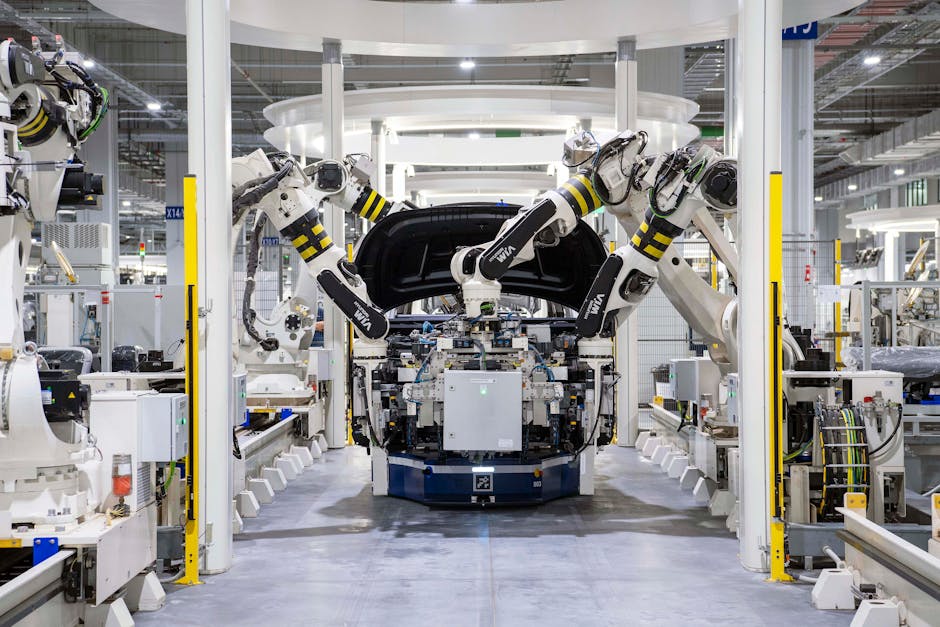
What's actually happening
Jobs don't vanish overnight
One thing got clearer in 2026. Jobs don't disappear one day. They fade out like someone slowly turning down the volume.
The sequence usually goes like this. First, work gets reshuffled under the banner of "efficiency improvements." Then a few positions get frozen, "temporarily." AI tools come in and someone says "headcount optimization." Then it goes quiet.
Years of operations work taught me something. The first thing a system sheds is always the repetitive, predictable work. Back then, a person absorbed that work because the company was inefficient. Manual batch runs, basic data consistency checks, stitching together the same report every week. Those always sat at the top of the automation queue. There's no reason human work would follow a different rule.
The change, in numbers
| 분야 | 2024년 대비 변화 | 주요 원인 |
|---|---|---|
| 데이터 입력/처리 | -40% | AI 자동화 |
| 기본 고객상담 | -35% | 챗봇 고도화 |
| 단순 회계업무 | -30% | 자동화 툴 |
| 기초 번역업무 | -60% | AI 번역 발전 |
Don't misread that table. It doesn't say the jobs are gone wholesale. It reads more like a signal that the roles are changing shape. The person who entered data now reviews it. The person who translated now polishes what the machine produced.
What most people miss
It's not a technology problem, it's a perception problem
Talk to enough people and you hear the same confusion. One camp says "AI is taking my job." The other says "I'll fall behind if I can't use AI." Both are mixing up cause and effect. AI itself isn't the threat. The gap between people who use it and people who don't is the threat.
Look at any dev team. The output difference between developers who lean hard on tools like GitHub Copilot and those who don't is getting visibly wide. It's not that they type a line of code faster. It's that they hand the boilerplate to the tool and spend the reclaimed time on design and verification. The same eight hours ends up somewhere completely different.
The real shift is psychological
The biggest change is in the question people ask. It used to be "which company should I get into?" Now it's "how do I create value the market wants?"
Sounds like a small rewording. The direction is inverted. One is asking permission. The other is taking the wheel.
Taking the wheel is terrifying at first. You can't hide behind a company name, nobody guarantees your stability, and everything lands on you. I felt the same anxiety when I moved into consulting. Only then did I realize how much the organization had been covering for me.
Three things the prepared people have in common
From what I've watched, the people who started preparing early share some fairly clear traits.
1. They think in functions, not titles
They don't define themselves as a "frontend developer." They think of themselves as "someone who turns user experience into code."
That distinction matters more than it sounds. Titles differ by company and can evaporate in a single reorg. Functions are needed everywhere. In system terms, they're designing themselves as a module you can plug in anywhere, not a monolith pinned to one specific server.
2. They don't pile all their income into one place
Look at how the prepared ones earn and it usually breaks down to 60-70% from the day job, 20-30% from side projects, and 10-20% from investments or other sources. The point isn't the ratio. It's not depending on one source. Same principle as designing infrastructure with no single point of failure. Spread the traffic so the whole thing doesn't halt when the day-job node wobbles.
3. They treat technology as a tool, not an enemy
This is the important one. Seeing AI as a partner that raises your throughput rather than a competitor for your seat.
A designer I know pulls first drafts out of Midjourney fast, then spends the saved hours talking to clients. Revenue doubled. The tool didn't replace the person. The person used the tool to focus on the part only a person can do.

What you can do right now
Things you can start within a week
First, actually use the AI tools, one at a time. ChatGPT for day-to-day throughput, Notion AI to automate document writing, Canva AI to cut down design work.
Second, personal branding. Update the LinkedIn profile, share what you know on a blog or YouTube, show up at networking events.
Third, audit your skill stack. Figure out which parts of your job can be automated, shift toward the creative and strategic parts, and pick up one new skill at a time.
None of this needs a grand launch. Big transitions never arrive all at once in operations either. You start by automating one small batch job and wiring up one monitoring metric. Careers work the same way.
Where this goes (realistically)
What shrinks
Simple repetitive work is already going. Roles that only relay information — AI is more accurate and faster. Analysis work with a clear pattern goes the same way. Because it's predictable.
What matters more
The other side: creative problem solving, communication and empathy between people, productivity with AI in the loop, and how fast you learn and adapt.

Wrapping up
I'll admit this is a scary read. But the change already started, and the choice is still on this side of the table.
Three things. Don't deny the change. Start preparing now. Move even if it isn't perfect.
Doing nothing is the most dangerous option. Systems are the same. The teams that change nothing because they're afraid of an outage are the ones that blow up hardest. Better to ride the wave than to try to block it.
So where are you standing right now? Answering that honestly is the actual starting point.
Was this post helpful?
One click helps me write the next one