The AI Semiconductor Supercycle: Why This One Is Actually Different
Translated from the original Korean post. 한국어 원문 보기 →
What the Numbers Are Actually Saying
Something strange is showing up in the semiconductor market right now. As of April 2026, Samsung Electronics trades around ₩220,000 and SK hynix around ₩1.3 million. The run-up alone is jaw-dropping. But the share price isn't what interests me. What interests me is that the angle from which the market looks at this industry has shifted.
The old semiconductor market was simple. Memory prices rise, everybody adds capacity, capacity overshoots, prices collapse. A chicken game where the winner is whoever can bleed the longest. Price was the weapon, and margins rode the cycle up and down.
What's happening now doesn't fit that pattern. Supply isn't shrinking because prices fell. Demand appeared somewhere entirely new.
AI Infrastructure Rewrote the Rules
The epicenter is the AI data center. Chip demand used to be scattered across PCs, phones, and general-purpose servers. One segment cooling off got absorbed by another, so aggregate demand moved gently.
Not anymore. A single enormous buyer showed up, and the silicon it wants is a different category of part.
- HBM (High-Bandwidth Memory) — high-bandwidth memory for ultra-fast data movement
- High-capacity storage — somewhere to put massive models and training data
- High-performance compute silicon — GPUs, NPUs, and other AI-specific processors
HBM in particular has a steep barrier to entry. The engineering is hard enough that only leaders like Samsung and SK hynix can yield it reliably at volume. That's the whole point. Commodity memory was something anyone could stamp out; in a market where you can count the qualified suppliers on one hand, price wars don't really happen. The axis of competition moved from "how cheap" to "can you even build it."
What a Trillion-Dollar Market Means
Forecasts put the global semiconductor market at $1 trillion by 2027. Read that number as "the market got bigger" and you've seen half of it.
The character of the growth changed too.
| 구분 | 기존 반도체 시장 | AI 중심 시장 |
|---|---|---|
| 성장 패턴 | 주기적 순환 | 구조적 성장 |
| 주요 수요 | 소비자 기기 | 데이터센터, AI 인프라 |
| 경쟁 요소 | 가격, 물량 | 기술력, 품질 |
| 수익성 | 변동성 큰 편 | 상대적으로 안정적 |
Look at what big tech is pouring into data centers and it stops looking like a fad. What Google, Microsoft, and Amazon are spending on AI infrastructure isn't a quarterly line item — it's multi-year capex. Once a data center goes in, years of operating cost and expansion follow it. That's just how infrastructure works. Once you commit, stopping is hard.
Behind the Rally, and What to Watch
Samsung at ₩220,000 and SK hynix at ₩1.3 million is what you get when an AI demand surge lands exactly on an HBM shortage. Nvidia's AI chip demand went vertical, HBM became the bottleneck, and the Korean firms that happen to be strong there caught the spotlight.
A changed structure doesn't mean risk disappeared. If anything, a structural shift is exactly when a broken assumption hurts most. A few things I keep watching.
Whether AI investment actually pays: nobody has proven that big tech's spending converts into revenue. The moment ROI gets seriously questioned, the first thing to slow down is data center buildout. If demand rests on willingness to invest, demand wobbles when that willingness does.
Supply chain complexity: geopolitical shocks or raw material disruptions hit production directly. The US-China tech rivalry remains a variable nobody in this industry controls.
Technical ceilings: Moore's Law is running into physics, and squeezing more performance out of the old playbook keeps getting more expensive and harder.
How This Looks From the Infrastructure Side
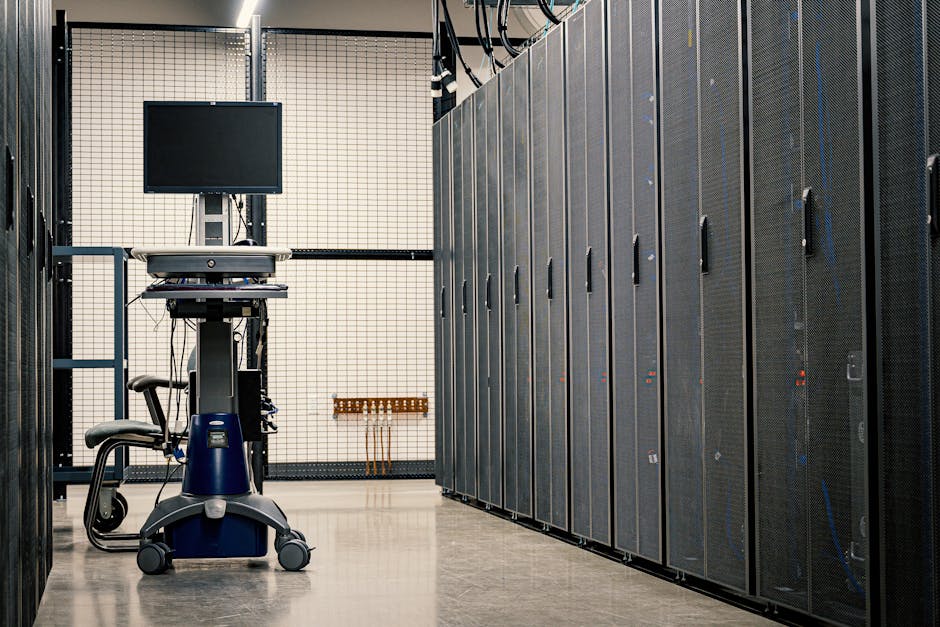
If you've spent your career running infrastructure, you feel this shift before you see it in the numbers. A few years ago, a server with a few dozen GB of RAM handled most workloads fine. Bolt on a monitoring stack, watch resource usage, and memory rarely showed up as the bottleneck.
Now a single AI model starts at hundreds of GB. LLMs can exceed hundreds of GB just for the model itself, and it's common to find that existing hardware simply can't host it. This isn't about slicing resources more efficiently. The absolute amount one workload demands changed.
So it isn't just "we need more chips." The kind and structure of chip we need changed. A market that makes more of the same thing and a market that makes a different thing don't play by the same rules. Calling it a paradigm shift doesn't feel like an overstatement to me.
Where the Korean Players Stand
Even after a rally this big, there's a clear reason Samsung and SK hynix stay in focus. Both hold world-class technology in high-value memory, and that's precisely where AI demand landed.
The HBM market is effectively an oligopoly. With HBM4 mass production on the near horizon as of 2026, their technical lead is hardening. As long as the AI boom holds, margins have a good chance of staying stable for a while.
That's not a reason to relax. Chinese and other latecomers are closing the technology gap fast. Semiconductor history has demonstrated more than once that oligopolies don't last forever. The question is how long they can keep the gap open in R&D and volume manufacturing.

Wrapping Up
I don't read ₩220,000 and ₩1.3 million as share prices. I read them as a signal that the engine of the semiconductor market moved from "consumer device replacement cycles" to "the AI infrastructure investment cycle."
What separates this from the old cyclical pattern is the root of the demand: infrastructure investment. Infrastructure doesn't get built casually, and once it's built it doesn't get ripped out casually either. So I'm not betting on a short cycle here. But it's worth holding onto the fact that the root is willingness to invest. Willingness cools faster than structure does.
Was this post helpful?
One click helps me write the next one