Why the PS5 Keeps Getting More Expensive - Blame AI?
Translated from the original Korean post. 한국어 원문 보기 →
Does It Make Sense That a Four-Year-Old Console Costs More?
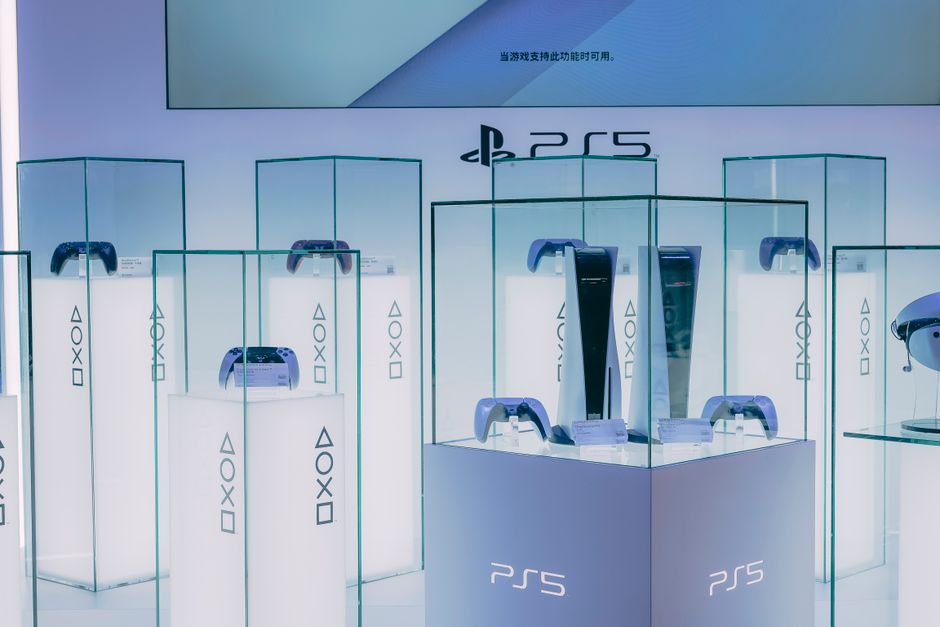
I checked PS5 pricing last week and had to look twice. It had gone up again since a few months ago. Not a rounding error, either — a real bump.
Consoles are supposed to get cheaper over time. Manufacturing gets refined, the up-front R&D and tooling costs get paid off, and then you cut the price to reach more buyers. The whole console business model is to put the box out cheap and make it back on games and subscriptions. Yet here's the PS5, years past launch, going the other way.
When a price curve runs backwards, something outside the normal cost structure is pushing on it. So I dug in. There are more layers to it than I expected.
It Comes Down to Silicon, and to AI
The biggest driver is chip supply. More precisely, the demand for high-end chips that the AI boom pulled forward.
The PS5's brain is AMD's Oberon chip, fabbed at TSMC. Game logic, graphics rendering, load times — the whole performance envelope of the console runs through it. The catch is that TSMC doesn't exist to print PS5 chips.
The same fabs turn out iPhones, MacBooks, and GPUs. And over the past few years, orders for AI server silicon have piled onto those lines.
Since the ChatGPT wave in 2023, Google, Microsoft, Meta, and Amazon have been pouring absurd money into AI infrastructure. Their chip orders run into billions of dollars per quarter. That's not the same fight as consumer product volume — it isn't even the same unit of measurement.
What Foundry Capacity Actually Looks Like
The thing to understand is that fab capacity is a fixed resource. TSMC can't just print more of it because more orders showed up. Building a new fab costs an unreasonable amount of time and money: $15–20 billion per fab, three to four years to construct, and another one to two years before it's actually producing at volume.
So even if you broke ground today, real output arrives a long way down the road. Supply structurally can't chase demand at speed.
Anyone who's run cloud infrastructure will recognize the shape of this. Physical resources have a ceiling, and allocating a limited pool always turns into a priority fight. On a shared node, the workload with the higher SLA gets served first. Foundries work the same way. The customer paying more and buying more stands at the front of the line.
Put the per-chip price of an AI server next to the per-chip price in a PS5 and you don't need to do the math to know who gets priority. Bleak position for Sony to be in.
Then There's the Weak Yen
It isn't only about silicon. Currency matters too.
Sony is a Japanese company. Its major costs go out in yen while revenue comes in across a pile of other currencies. And the yen has run notably weak against the dollar since 2022.
| 연도 | USD/JPY 평균 환율 |
|---|---|
| 2021 | 109엔 |
| 2023 | 140엔 |
| 2026 | 148엔 (현재) |
Manufacturing costs are still paid in yen at the same level, but the real value of dollar and euro revenue shrank. One line on an FX chart eats your margin. To claw that back, there isn't much on the table besides raising local prices market by market.
Chip supply pushes costs up. FX chews on margin. When both pressures point the same direction, prices go up.

AI Rewired the Silicon Ecosystem
Zoom out and AI didn't just add demand. It changed what demand looks like.
Before 2022, chip demand was reasonably predictable. Phones, laptops, consoles — seasonal patterns, a picture you could sketch out in broad strokes. Foundries allocated capacity to that rhythm.
Then AI showed up and introduced a variable nobody can forecast. The moment ChatGPT hit, nearly every company jumped into the AI race and demand spiked out of nowhere. AI infrastructure isn't a one-time build either; it keeps expanding, so the spending never finishes. On top of that, chips for AI training and inference basically require the newest process nodes.
That last point is the painful one. AI chips and console chips are competing for the same leading-edge capacity. A big chunk of what Sony used to secure has been vacuumed up by the AI side. Someone with a fatter wallet cut into a line you'd already been standing in.
This Isn't Ending Soon
I don't see it resolving in the short term.
New fabs are coming online, but AI investment keeps scaling alongside them. If supply grows and AI demand grows with it, the added capacity likely gets absorbed on the AI side. As long as both curves rise together, there's no slack left over for consoles.
Sony has no reason to cut prices either, not while inventory keeps clearing this fast. Demand above supply means weak pressure to discount.
What's left to hope for: holiday bundles with games or accessories thrown in, a possible repricing of the current model when the PS5 Pro lands and pushes it down the lineup, and maybe some breathing room in supply once new fabs come up after 2027.
Wrapping Up
The PS5 getting more expensive isn't a Sony problem. Moving into the AI era rewrote the allocation rules for silicon as a shared resource, and consoles just ended up further down the priority list.
Technology outran the supply chain's ability to adapt. New demand jumps quarter to quarter while the fabs that have to absorb it move on three-to-four-year cycles. Until that gap closes, consumer hardware keeps eating the price pressure.
As a buyer, about all you can do is read the supply chain instead of the price curve and wait for the right sale. At least "why is a four-year-old console more expensive?" now has an answer.
Was this post helpful?
One click helps me write the next one